Fairy Tale Royalty: Charlotte-Rose de la Force (France)
This post originally appeared on Substack on June 3, 2023
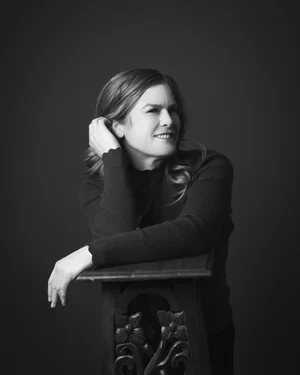
In 2021, I embarked upon a project with the Australian Fairy Tale Society. We were to embody and research three extraordinary women who were instrumental in creating literary fairy tales in the late 17th century: Henriette-Julie de Murat, Marie-Catherine D’Aulnoy, and Charlotte-Rose de La Force. I played the latter and have never been so inspired by a woman and her works. We created a web series, which you can see here. We also published an eBook, which you can find here. To me, these women (and the others who joined them, are fairy tale royalty - after all, it was Marie-Catherine D’Aulnoy who first coined the term ‘fairy’ story.
I fell in love with de La Force and started my creative thesis in 2022 based on her work. My thesis topic is ‘Explorations of female-empowered sexuality in the fairy tales of Charlotte-Rose de La Force’. I completed it today. I have a couple of formatting elements to tidy up, but I am feeling overwhelming joy at completing it. It is comprised of a 7000-word story, inspired by her fairy tales and a 3000-word research statement. Although I cannot publish it here until the assessment process is complete, I wanted to share some of the fascinating things I discovered on this journey.
De La Force published her eight fairy tales in two parts, between 1697 and 1707 with the complete collection being published the year after she died in 1725. The stories include an early version of Rapunzel, called Persinette. Persinette, unlike the Grimm’s tale, gets pregnant with the Prince and gives birth to two children after her banishment. What I love about de La Force’s writing is subtle and titillating without being pornographic. But Persinette, while a wonderful tale, is not my favourite of de La Force’s fairy tales.
My favourite is called Vert et Bleu, (Green and Blue) it is sensual and delicious and shows mutual love and affection with elements of magic thrown in. Fairer than a Fairy is magical and has a strong undercurrent of female companionship and The Good Woman is almost autobiographical in the telling of a woman who has removed himself from court life for a quiet time in the countryside. De La Force herself was banished to a convent at the age of 47 and would have possibly enjoyed the solitude and lack of artifice she was accustomed to at the French court. The Enchanter has hints of a menage a trois and love is abundant in The Power of Amour, The Land of Delights, and Tourbillon.
Unfortunately, there is only one known English translation of her stories, and I wish, not for the first time I was fluent in French. Her biography, too, was in French, which I hand-translated, as it was going to cost $7000 for a proper translation. Learning about de La Force (the French court, and her interesting mother) was well worth the time I’ve spent typing in French into Google. I have many things I would like to follow up on.
Although my thesis is complete, my interest in de La Force and her works (and the other women of the period and their works) remains a fascination for me. One of the things I love about fairy tales is their origins, often in the retelling, the stories lose their inherent magic. So I intend to retell them within the same ethos in which they were originally told, so stay tuned to this space, there will be more on Charlotte de La Force and her novels and fairy tales.
~ Alyssa